How to Choose the Right Industrial Foot Switch
Current rating, contact form, protection class, housing material and safety features — the five things that decide which foot switch fits your machine.
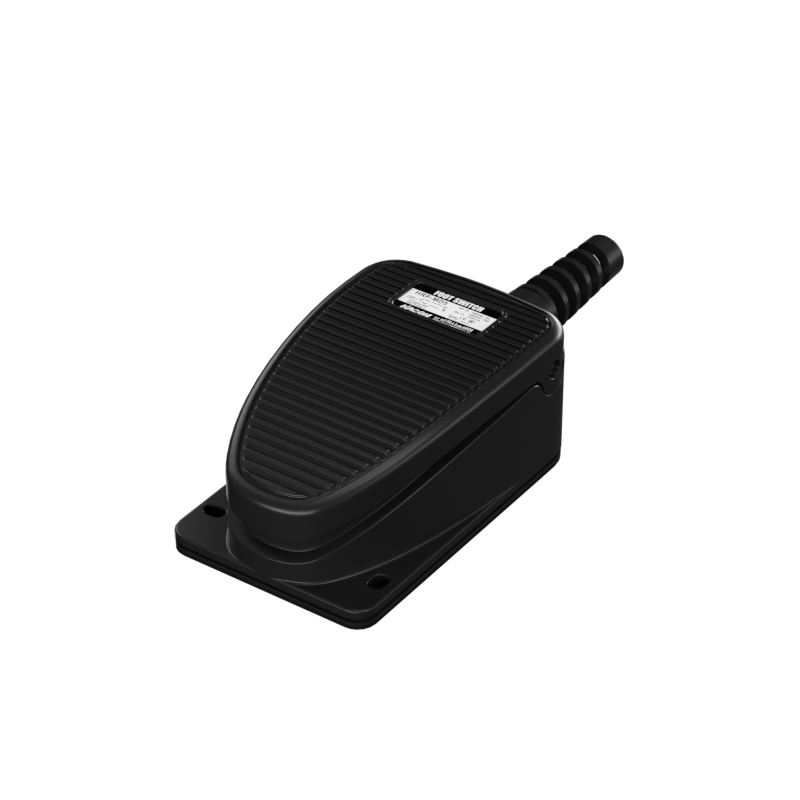
A foot switch frees the operator's hands, but the wrong one fails early or — worse — actuates when it shouldn't. Five factors decide the right choice.
Current and voltage. Match the switch to the load it breaks. Light signal and PLC inputs are happy with an 8A plastic pedal such as the HRF-M1; motors and contactors drawing up to 15A need a heavy-duty Z15G-based pedal like the HRF-HD3 or HRF-MD5.
Contact form. A simple momentary 1a contact suits start/jog control; a 1C changeover lets you wire both normally-open and normally-closed; dual 2C contacts give redundancy for safety circuits.
Protection class. Choose IP54 for clean indoor use, IPX7/IPX8 for wash-down and medical rooms, and IP65/IP67 for workshops with dust and coolant. KACON offers the same pedal family across all of these.
Housing and duty. Plastic ABS/PC is light and economical; die-cast aluminium survives daily industrial use; high-density aluminium rated to 200J impact protects safety-critical presses.
Safety features. For dangerous machinery, specify guards, an anti-misoperation lock, a three-position (hold-to-run) action and an emergency stop — all available on the HRF-HD8 safety series and HRF-C two-hand console.