Momentary vs Latching Foot Switches: Action Types Explained
Momentary (self-reset), latching (maintained) and three-position foot switch actions — how each works, where to use it, how to tell them apart, and how to choose.
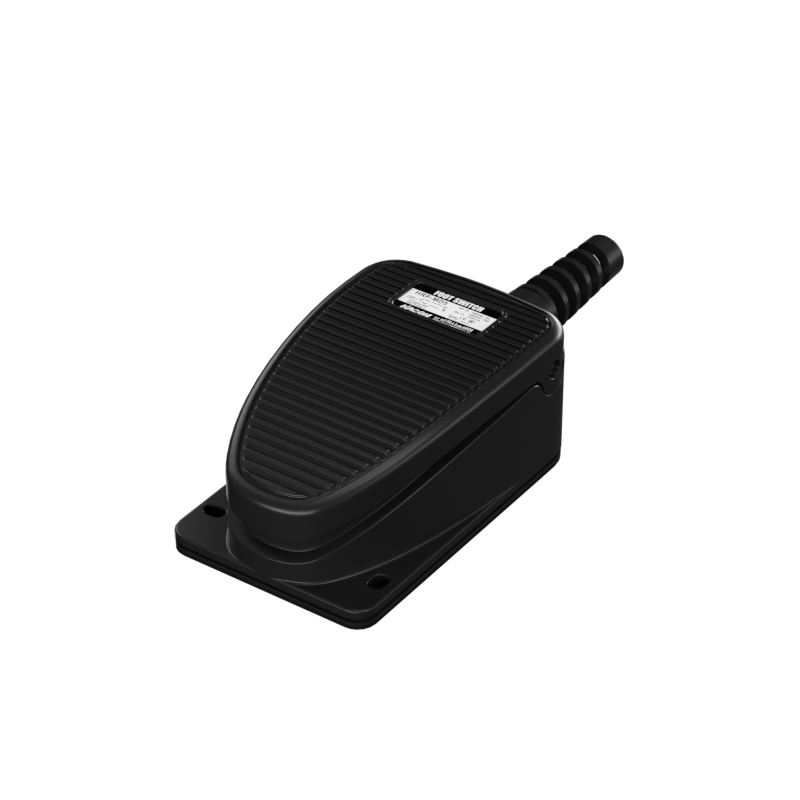
The single most important thing to get right when you specify a foot switch is its action — what the contact does when you press and release the pedal. There are three to know: momentary, latching and three-position. This guide explains each, shows the mechanism in motion, and helps you choose.
How a Momentary Foot Switch Works
A momentary (self-reset) switch is active only while your foot holds the pedal down. Lift your foot and an internal spring instantly returns the pedal and re-opens the contact. The animation below shows one press-and-release cycle — the contact closes (turns green, "ON") while pressed and opens again on release:
Because it stops the instant the foot is lifted, a momentary switch is the basis of a "dead-man" control — the safest behaviour for most machinery. Typical uses: jog/run, welding, sewing, dispensing, X-ray exposure, press operation, and any function that should run only while the operator is actively engaged.
How a Latching (Maintained) Foot Switch Works
A latching (maintained / self-locking) switch stays in position after one press — press once for ON, press again for OFF, exactly like a wall light switch. The operator doesn't keep a foot on it. Typical uses: switching machine power, turning a lamp or pump on/off, and selecting a mode that should persist hands-free. Latching is convenient but should not be used where motion must stop the moment the operator steps away.
The Third Action: Three-Position (Enabling)
Some KACON pedals (e.g. HRF-MD3 / MD4 and the HRF-HD8 safety flagship) offer a three-position action used as a safety enabling device: up = stop, middle press = run, and full hard press = stop again. Both letting go and panic-pressing through the middle position stop the machine — protecting against a startled operator stamping down.
Quick Comparison
| Action | Behaviour | Best for | Example KACON |
|---|---|---|---|
| Momentary | On only while held; springs back | Dead-man control, jog, welding, sewing | HRF-M1 / MD5 / MX1 |
| Latching | Press on / press off, stays put | Power on/off, lamp, mode select | HRF-MD3 / MD4 (option) |
| Three-position | Stops if released OR over-pressed | Machine-tool safety enabling | HRF-HD8 / MD3 |
How to Tell Which One You Have
Press the pedal and watch the contact: if it springs straight back, it's momentary; if it stays down until you press again, it's latching. The datasheet lists the action — momentary is sometimes written "self-reset" and latching as "maintained" or "self-locking".
How to Choose
- Must the machine stop the moment the foot lifts? → Momentary (and consider three-position for true safety).
- Do you want to toggle a state and walk away? → Latching.
- Is this a safety stop on a press / brake / robot? → Three-position safety pedal.
- When unsure, default to momentary — it is the safer choice for machinery.
FAQ
Q: Is a "dead-man" pedal the same as momentary?
Yes — "dead-man" describes the behaviour (release = stop), which momentary action provides.
Q: Can one pedal be both?
A single contact is one or the other, but a multi-gang pedal can carry a momentary contact and a latching contact together.
Q: Which is safer?
Momentary (or three-position) — latching can leave a machine running after the operator leaves.
KACON Foot Switches
KACON HRF-series foot switches are available in momentary, latching and three-position action, single or double pedal, in plastic, aluminium and steel bodies. Browse the range or contact us for OEM/ODM options.