Single vs Double-Pedal Foot Switches: How to Choose
When to use a single vs double (twin) pedal foot switch, the interlock/seesaw design, two-step (dual-stage) pedals, guards, multi-gang contacts, and applications by industry.
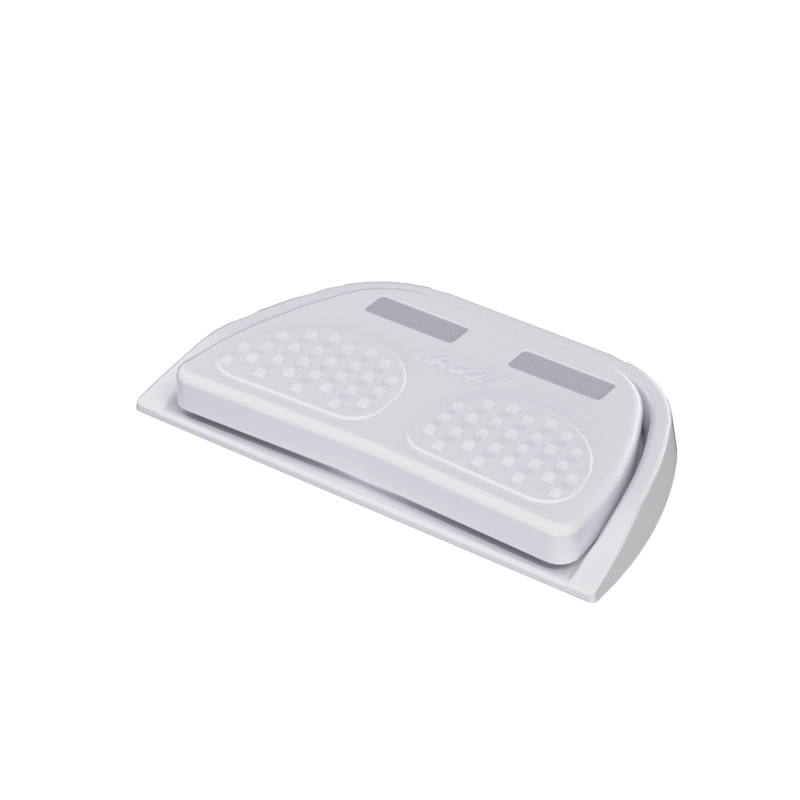
Choosing between a single-pedal and a double-pedal foot switch comes down to one question: how many functions must the operator control with their feet? But there are a few more options worth knowing — twin interlocked pedals, two-step pedals, and guards. Here's the full picture.
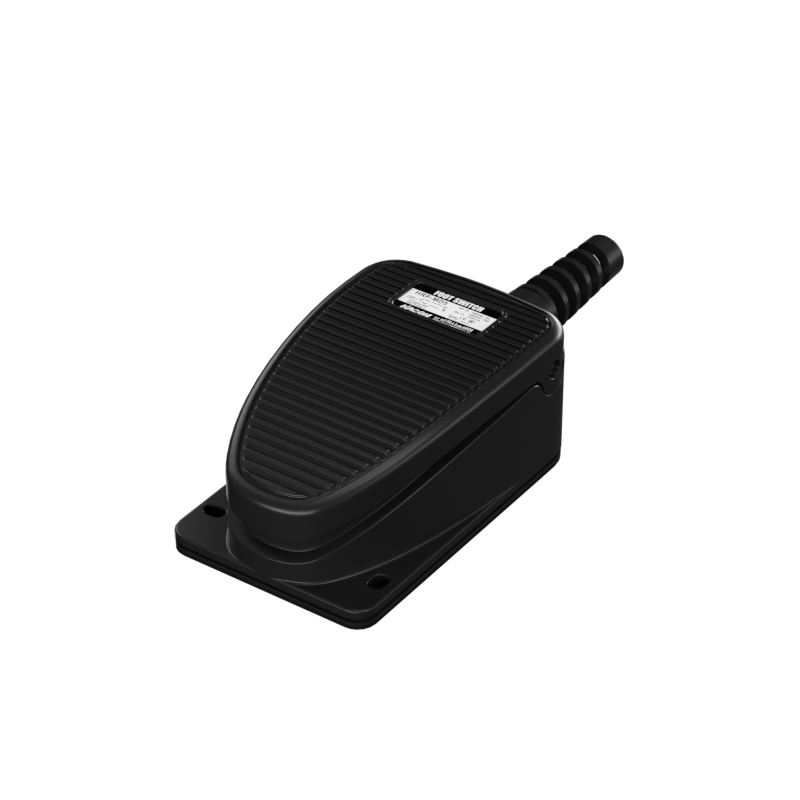
Single vs Double at a Glance
A single pedal controls one action; a double (twin) pedal lets one operator control two actions hands-free — without reaching for a second switch. The animation shows a single pedal pressing, and a twin pedal alternating between its two pedals:
When to Use a Single Pedal
One action — start, jog, weld, stitch, dispense, capture. Most machines need only this. Single pedals are the smallest and lowest-cost option (e.g. HRF-M1 plastic, HRF-MD5 aluminium).
When to Use a Double / Twin Pedal
Two related actions controlled by one operator: up / down, forward / reverse, clamp / release, or fast / slow. KACON's HRF-M6 uses a seesaw (interlock) design — pressing one side lifts the other, so the two functions can't be triggered at once, preventing dangerous double-actuation. Common on press brakes, benders, medical chairs, test rigs and dental units.
Two-Step (Dual-Stage) Pedals
A two-step pedal gives two outputs from one pedal by travel depth: a light press = stage 1 (e.g. slow / arm), a full press = stage 2 (e.g. fast / fire). Useful for variable-speed sewing, welding pre-/full-weld, and "arm then run" sequences.
Guards, Covers & Multi-Gang
- Guard / cover — a hood over the pedal prevents accidental presses (KACON HRF-G guard, or built-in guarding on HRF-HD3).
- Multi-gang — more than one contact block in a pedal, so a single press can switch several circuits or give both NO and NC.
- IP rating — match the floor environment (oil, water, dust).
Comparison
| Single pedal | Double (twin) pedal | |
|---|---|---|
| Functions | One | Two (interlocked) |
| Typical use | Start, weld, stitch, dispense | Up/down, fwd/rev, clamp/release |
| Industries | Sewing, packaging, general machines | Press brakes, benders, medical, test |
| KACON example | HRF-M1, HRF-MD5 | HRF-M6 (seesaw interlock) |
How to Choose
- Count the foot-controlled functions: 1 → single, 2 → twin.
- Two functions that must never fire together? → twin interlock (HRF-M6).
- Need speed / stage control from one pedal? → two-step.
- Risk of accidental presses? → add a guard.
FAQ
Q: Why use a twin pedal instead of two separate pedals?
One housing saves space and wiring, and the interlock prevents both functions firing at once.
Q: Can I get more than two pedals?
Yes — multi-gang and custom configurations are available for special machines.
KACON Single & Double Pedals
KACON offers single, twin-interlock (HRF-M6), two-step and guarded foot switches across the HRF range. Browse the range or contact us for OEM/ODM.